
August 2010 - Volume 4 Issue 7

CIBERweb Newsletter

Success Story

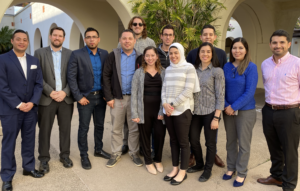
2010 European Business Study Abroad - Brigham Young University

I have a greater desire now to become a part of a worldwide community. It is no longer just about me and the town I live in. The world is full of great people who are doing great things and we need to get together with more of those people. We should not just limit ourselves to the resources that are close to us.

Adriane Hansen - 2010 EBSA student

Featured National Impact Publication

Faculty Development in International Business 2009-2010

Upcoming Activities

August 5, 2010

India Exchange Network - Temple University
Third of five seminars by the World Trade Center of Greater Philadelphia and Temple University CIBER Fox School of Business, as part of the India Exchange Network for companies doing business with India. Consider the opportunities presented by the following facts:

  • India has a goal to reach 22,000 MW of solar capacity by 2022
  • Up to 40% of farm produce is lost to rot due to lacking infrastructure
  • India expects to add 309,000 km of newly paved roads to it transit network by 2013
  • McKinsey estimates that India will require $1.2 Trillion investments in infrastructure to handle its trend toward urbanization
Our expert speakers include: Sandip Shah, PhD, Assistant Professor, Civil and Environmental Engineering, Temple University Arun Deb, PhD, P.E., DEE, Vice President (Retired), Weston Solutions, Consultant, Water and Wastewater Treatment Umesh Choori, President, Energy Guru

About CIBERs

The Centers for International Business Education and Research (CIBERs) were created under the Omnibus Trade and Competitiveness Act of 1988 to increase and promote the nation's capacity for international understanding and economic enterprise. Administered by the U.S. Department of Education under Title VI, Part B of the Higher Education Act of 1965, the CIBER program links the manpower and information needs of U.S. business with the international education, language training, and research capacities of universities across the U.S. Thirty-one universities were designated as centers that serve as regional and national resources to business, students, and academics. Together, the CIBERs form a powerful network focused on improving American competitiveness and providing comprehensive service and programs that help U.S. business succeed in global markets. If you wish to contact us regarding this newsletter or for additional information about CIBERs, please email webmaster@ciberweb.msu.edu. If you no longer wish to receive this newsletter, you can unsubscribe from our mailing list.

August 2010 - Volume 4 Issue 7