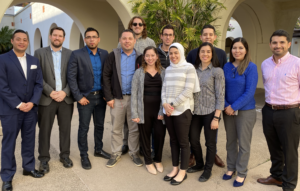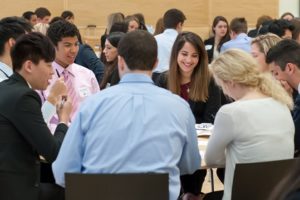

I will be meeting with my faculty next week as we get ready to start the fall semester. I will be showing them the resources that we talked about during the week and asking each of them to incorporate international concepts into their classes. I will be asking them to share with me what they have done and how easy it was so that we can share them across the division.
Securing our Nation's Future through International Business Education-15 Years of CIBER (1989-2004)
October 2, 2009
CIBER Luncheon Seminar Series - University of Florida
Featuring Richard Yudin, Technical and Environmental Manager, Fyffes, a major Europe-oriented importer of tropical fruit
October 8, 2009
The CIBER Doctoral Symposium on Foreign Language Pedagogy for Business and the Professions - Purdue University
This program will be the first symposium of its type especially for Ph.D. students in business languages to encourage greater long-term focus on business language research and teaching among future language faculty and leadership (deans, department heads, etc.). The conference will focus on three themes: Current environment for business language education; Career Development; and Instructional Design. This is a unique event that will influence future language education leaders early in their careers to recognize the importance of business language and culture in their academic preparation.
October 9, 2009
Center for African Studies Lecture - University of Florida
Featuring Kenda Mutongi, Williams College: "Manyangas": Matatu Workers, Commuters, and Transport Culture in Nairobi
October 11, 2009
Symposium on Multicultural Psychology - Conducting Multinational Research Projects in Organizational Psychology: Challenges and Opportunities - Michigan State University
This is a conference that is part of the biennial Symposium on Multicultural Psychology at Michigan State University. The goal of the symposium is to identify the best practices and methodological lessons learned from conducting large scale multinational projects and will feature renowned researchers as invited speakers, breakout and discussion groups for interchange on one's own cross-cultural research, and a poster session.
October 13, 2009
Michigan Export Growth Program Kick-Off - Michigan State University
Local companies are invited to a breakfast meeting to learn more about the Michigan Export Growth Program (MEGP), and how they can benefit from this innovative new program.
October 14, 2009
Global Education Symposium: 21st Century Skills for the Global Economy - University of North Carolina
Today's employers need graduates equipped with the skills necessary to compete in an increasingly global, knowledge-based economy. World View's symposium offers administrators and faculty from all disciplines techniques and resources for integrating 21st Century skills across the curriculum. There will be general sessions, concurrent sessions on both content and classroom applications, and support for school or college-based teams in creating a global Action Plan. 1.5 CEU credits will be offered.
October 20, 2009
Global Business Club of Mid-Michigan: Robert Selig - Michigan State University
Robert Selig, Executive Director of the Capital Regional International Airport, presents "Lansing's International Port of Entry and Foreign Trade Zone"
October 21, 2009
Lansing Regional Chamber Economic Club Luncheon: Peter Pratt - Michigan State University
Peter Pratt is Senior Vice President, Health & Human Services at Public Sector Consultants.
October 21, 2009
Center for African Studies SASA Lunch - University of Florida
Featuring Meredith Marten, University of Florida: Public Health Interventions, Aid Dependency, and Sustainability in Northern Tanzania
The Centers for International Business Education and Research (CIBERs) were created under the Omnibus Trade and Competitiveness Act of 1988 to increase and promote the nation's capacity for international understanding and economic enterprise. Administered by the U.S. Department of Education under Title VI, Part B of the Higher Education Act of 1965, the CIBER program links the manpower and information needs of U.S. business with the international education, language training, and research capacities of universities across the U.S. Thirty-one universities were designated as centers that serve as regional and national resources to business, students, and academics. Together, the CIBERs form a powerful network focused on improving American competitiveness and providing comprehensive service and programs that help U.S. business succeed in global markets. If you no longer wish to receive this newsletter, you can unsubscribe from our mailing list.