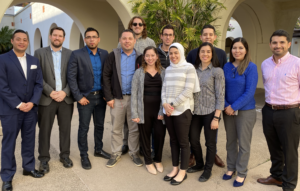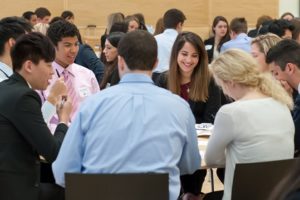

On the China study tour, I gained an in-depth understanding of the impact China will have on the world in the next 20 years. Visiting both Chinese and American companies and talking to Foreign Service officers within the embassy helped me understand the immense challenges and the grand opportunities that China is currently facing.
Leading Edge Programs Booklet (2006-2007)
Jan 1, 2008
Destination India - Temple University
The Fox School of Business, Temple University in partnership with The Welingkar Institute of Management, now hosts short term study abroad opportunities over the winter break in coordination with IB 3582.
Jan 1, 2008
Faculty Development- Shanghai, Hangzhou, Guangzhou, and Hong Kong - University of Colorado at Denver
The University of Colorado at Denver and Health Sciences Center CIBER is hosting the fifth annual faculty development in international business program (FDIB) "China: An Emerged Economic Powerhouse in the Global Economy." This faculty development program is sponsored by the US Department of Education and is co-sponsored by its Centers for International Business Education and Research.
Program goals are to provide faculty with firsthand knowledge of the dynamic growth of two of China's leading economic regions: the Yangtze River Delta and the Pearl River Delta, and to see how China is being transformed from a planned economy to a globally competitive market oriented economy. For further information please visit
http://www.cudenver.edu/International/CIBER/Pages/China%20FDIB.aspx or call 303-556-4738.
Jan 18, 2008
Geofinance: What Needs to Be Where? - University of Pennsylvania
What's driving the decision to locate particular financial activities or functions in particular places? How are these decisions being influenced by technological advances, regulation and the rise of emerging markets? What matters most in the competition between New York and London to become the capital of international capital?
Jan 18, 2008
Penn-Temple European Studies Colloquium (PTESC) - "Degrees of Democracy: Government Institutions and the Opinion-Policy Link" - Christopher Wlezien (Temple University, Political Science) - University of Pennsylvania
PTESC is a joint initiative of faculty from the University of Pennsylvania and Temple University with a common interest in the study of Europe. PTESC organizes a monthly seminar with current work in progress presented by scholars resident in, or visiting, the Delaware Valley. In addition, PTESC also organizes special events and workshops on topics of interest to Europeanists. PTESC aims to foster learning and dialogue across disciplinary boundaries, though primary emphasis is on the study of contemporary politics, political economy, and history in Europe.
Jan 23, 2008
International Economic Outlook For 2008: Exploring Future Challenges and Opportunities for the World’s Economy - University of Connecticut
JOIN US FOR A LUNCHEON WITH
EDWARD GUAY, PRINCIPAL, WINTONBURY RISK MANAGEMENT
11:45-1:30 PM
Edward Guay is a frequent speaker on current economic and political issues, demographics and
investment topics. He is a strategist to individuals, corporations and governments both in the U.S. and abroad. He is a member of the Hartford Society of Financial Analysts and the National Association for
Business Economists and holds a seat on the World Affairs Council of Connecticut Board of Directors.
Don't miss his predictions for the coming year!
Registration begins at 11:45, Luncheon at Noon
The Hartford Club, 56 Prospect Street, Hartford
Reservations required — space is limited! 860-241-6118 or www.ctwac.org
Jan 31, 2008
Language, Identity Status, and the Authenticity Question among Haitian Immigrant Youth - Temple University
Dr. Fabienne Doucet, Steinhardt School of Culture, Education, and Human Development, New York University: In Haiti, whether one speaks French is an immediate marker for social status. Although
French was the country's only official language until the late 1980s, folk wisdom had it
that in Haiti, 100% of the population spoke Creole (Kreyol), while only 20% spoke French. This history sets an important backdrop for understanding the complexities surrounding language use among Haitians living in the United States. In this presentation, I outline the contours of identity formation among Haiti-born (1.5-generation) and U.S.-born (2nd generation) youth as played out on the stage of U.S. schools. In particular, I focus on how students used language to align themselves politically and socially, to judge the extent of their peers' "authenticity" at Haitians, and to negotiate their own internal identity-forming processes. Data for this presentation come from an ethnographic study I conducted in Boston and Cambridge, MA under the umbrella of the Harvard Immigration Projects.
The Centers for International Business Education and Research (CIBERs) were created under the Omnibus Trade and Competitiveness Act of 1988 to increase and promote the nation's capacity for international understanding and economic enterprise. Administered by the U.S. Department of Education under Title VI, Part B of the Higher Education Act of 1965, the CIBER program links the manpower and information needs of U.S. business with the international education, language training, and research capacities of universities across the U.S. Thirty-one universities were designated as centers that serve as regional and national resources to business, students, and academics. Together, the CIBERs form a powerful network focused on improving American competitiveness and providing comprehensive service and programs that help U.S. business succeed in global markets. If you no longer wish to receive this newsletter, you can unsubscribe from our mailing list.